
Spiders
🕷🕸

Like many people, I used to fear them. I used to smash them. I never ventured out into the world seeking spiders to smash for no reason, but if one happened to make its way into my living quarters or enter into my personal space, such as my car, it would almost always be smashed. I eventually began to feel guilty; now I mostly relocate them. Sometimes I bring them outside when the weather is warm, and more recently, I’ve moved a few of them to the plant in my bathroom because it’s freezing out.
There was one that originally came from the exhaust fan vent in my bathroom. It lived under the bottom leaf of my plant for about 4 months, but it’s no longer there. At first, it would drop down from the vent on a web pretty much every day for weeks as I was getting out of the shower, and just chill in midair, halfway between the ground and the vent. I let it live up there in the vent for a little while, but I eventually put it on the plant because, regardless of my newfound respect for them and guilt for killing them in the past, it’s still creepy having spiders dropping down on top of you, especially when you’re butt ass naked. I feel bad for smashing so many of them, but I admit I will still smash them if I’m too creeped out. If they surprise me, and one crawls on me, it will die; it’s an instinctual reflex to smash whatever is crawling on me.
After all, some spiders are deadly. Some just inflict a poisonous bite that is not enjoyable, even if it probably won’t kill you (unless you fail to take the proper steps after being bitten). Should I be expected to make a taxonomic identification, discern their lethality? Make a thorough threat assessment before smashing them? That could be the difference between life and death. Ultimately, it comes down to how badly it’s encroaching on my personal boundaries.
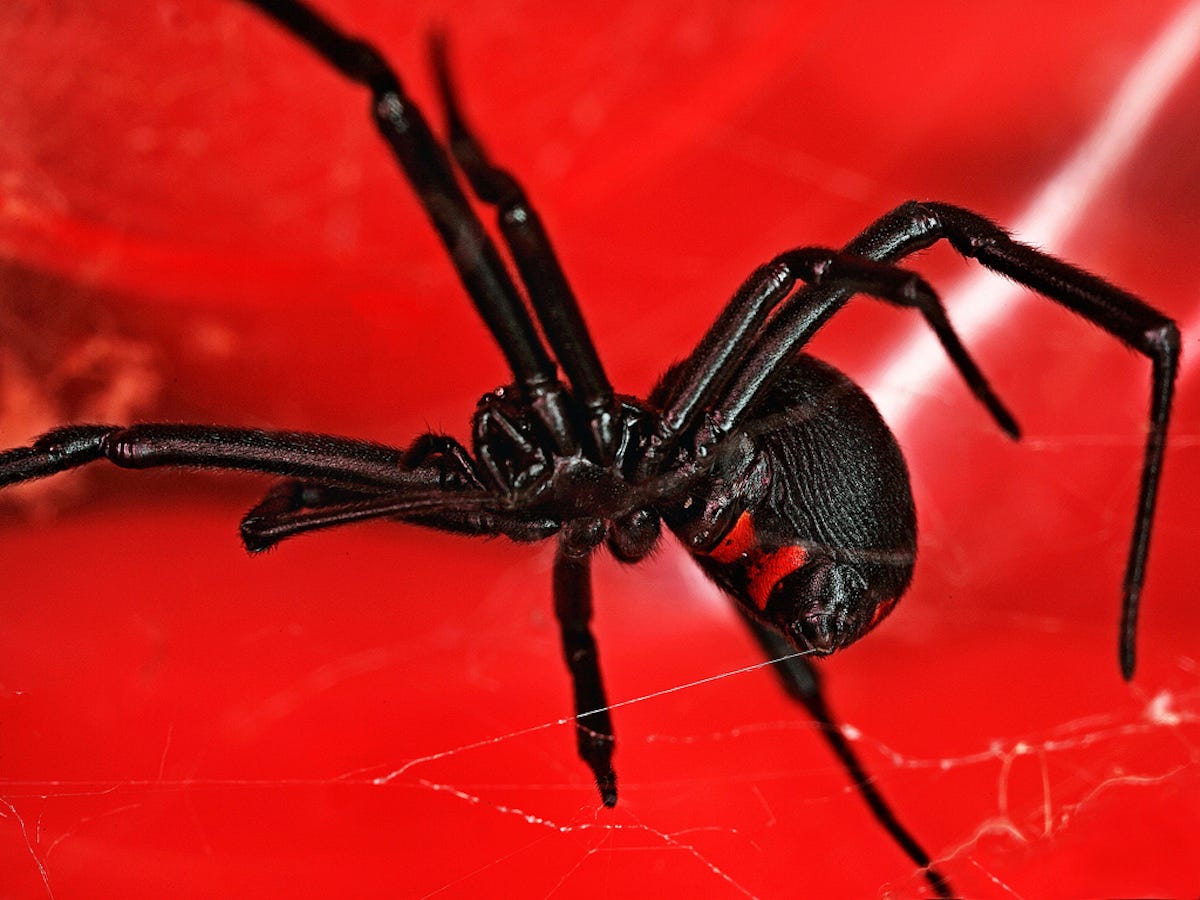
I did feel like the one dropping down from the vent every day was maybe checking me out, though. I’ve gotten the same feeling from birds and many other animals before; they’re curious. Life is interested in itself. Maybe an interest based mostly on hunger and instinct, and the desire to size you up to see if you’re a potential food source, but many creatures seem interested in humans for some other reason also. Maybe it was just basking in the steam. House spiders like places like bathrooms because, like all life, they need a water source. They like the steam from the shower because they get some of their water from drinking droplets of condensation on surfaces like sinks and showers.
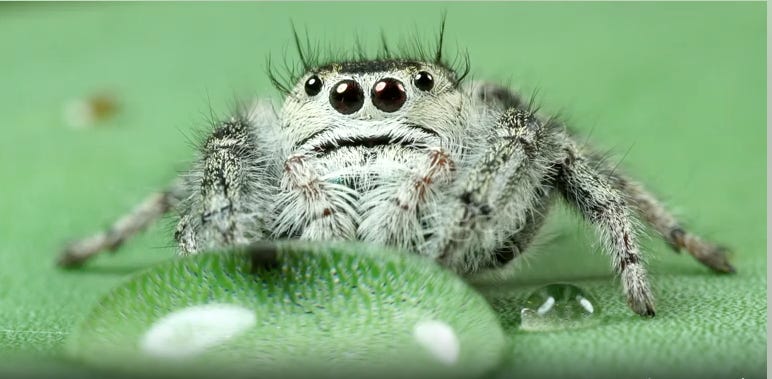
Spiders are fascinating, historically personified in folklore as females. Seamstresses of the tapestry of destiny, weavers of the strands of fate. Patient, persistent, intelligent, dangerous. Most have poor vision, but make up for it with extreme sensitivity to vibrations. Many water spiders (some of the creepiest spiders in my opinion) use the surface of a lake or pond to serve the same purpose as a web, catching trapped insects by detecting the vibrations they create in the water as they struggle.
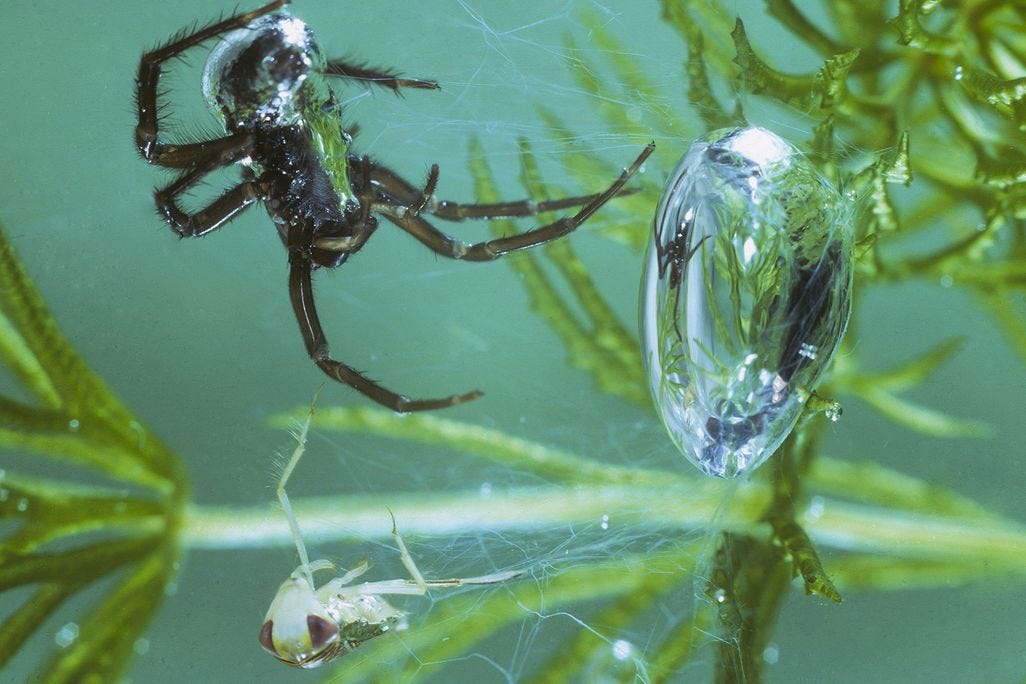
The “diving bell spider” spends almost its entire life underwater. They form air bubbles called diving bells using silk and a protein-based hydrogel. Both sexes create diving bell webs, used for digesting prey. Only the female's bell is used for mating and raising offspring. Females spend most of their time within their bells, darting out to catch any prey that touches the bell or the silk threads that anchor it. Before mating, the male constructs a diving bell adjacent to the female's and then spins a tunnel from his bell to hers, then breaks through to gain entrance.
Spiders employ various tactics to capture their prey. Of course, they create the traditional sticky spider webs we all know and love. Some also lasso their prey with sticky “bolas” (a strand with a large globule of sticky silk at the end) and chase them down. Many also mimic their prey to avoid detection. They are prolific hunters, and like all predatory animals, they possess a natural proficiency at their particular hunting method. They kill, and they do it effectively. Almost all of their time and energy is spent in pursuit of prey or mating.
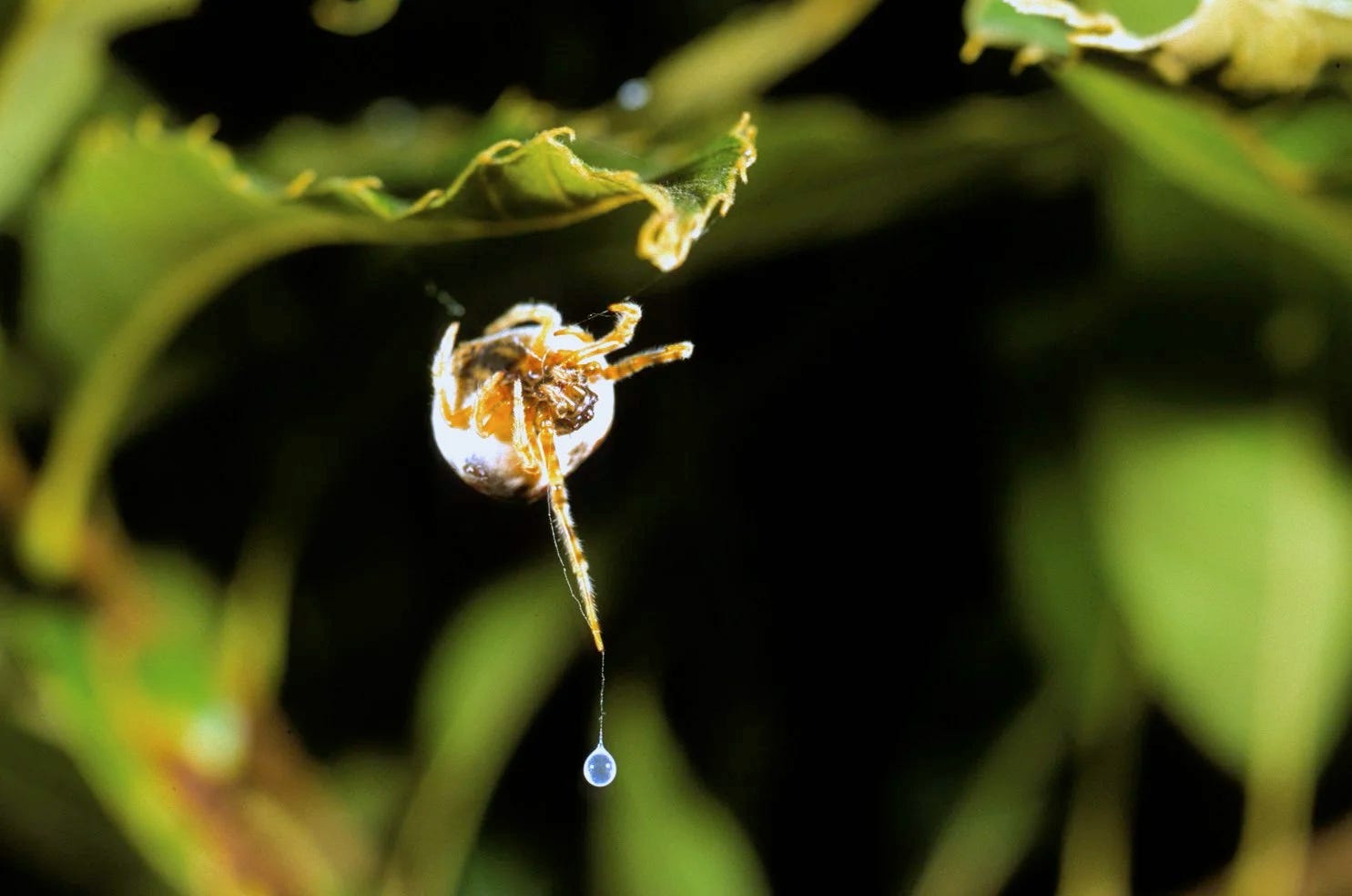
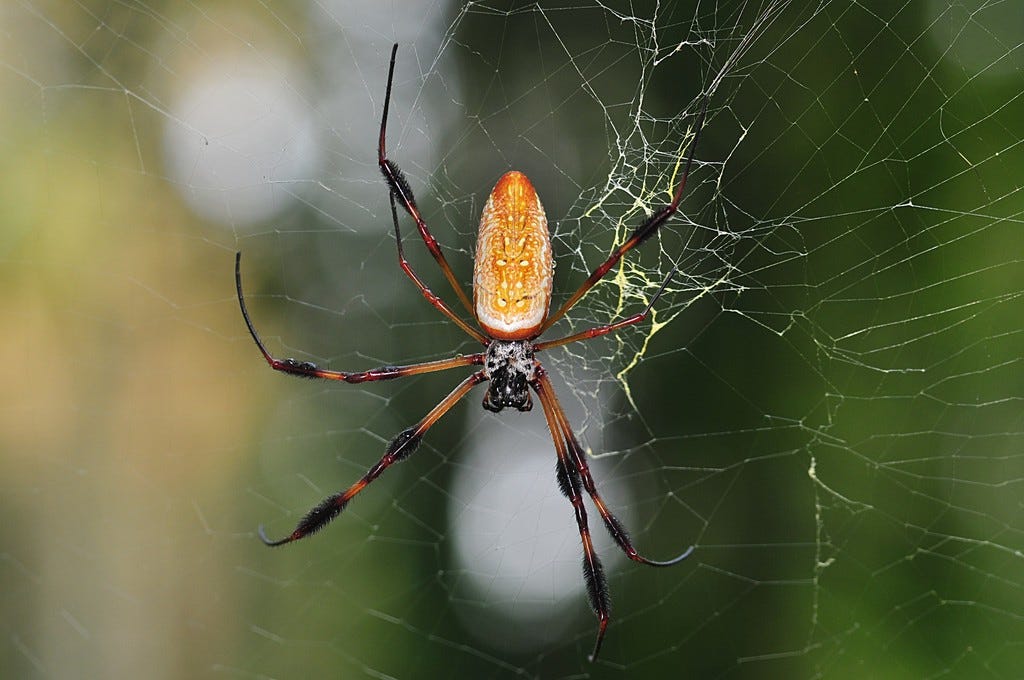
Some large spiders, especially tarantulas, have been known to prey on small birds and rodents, bats, lizards, and frogs. More than 40 different species of spiders have been reported to kill snakes. The golden silk orb-weaver spider (one inch in size, pictured below) has been observed killing a 29.5-inch green snake (almost 30 times its size). But they mostly kill things smaller than themselves. I’ve also killed many of them, and they’re smaller than I am, but I wasn’t killing them for food, just a perceived lack of respect. I eventually started to believe there was a very good chance it was not them, but me, who lacked respect.
They actually fascinate me a lot. This was very well done. Good representation of them. I love how intricate they make their webs and how they know where to step in it and where not to.
Hey Austin! Okay, I won't pick them up by hands, because of their alien nature, but I won't harm them. I refuse. They're the best pest control there is. I'll pick them up with a piece of junk mail or something and put them outside, or in a corner